
AI-Powered Instructional Design: From Planning to Delivery
Sep 25, 2026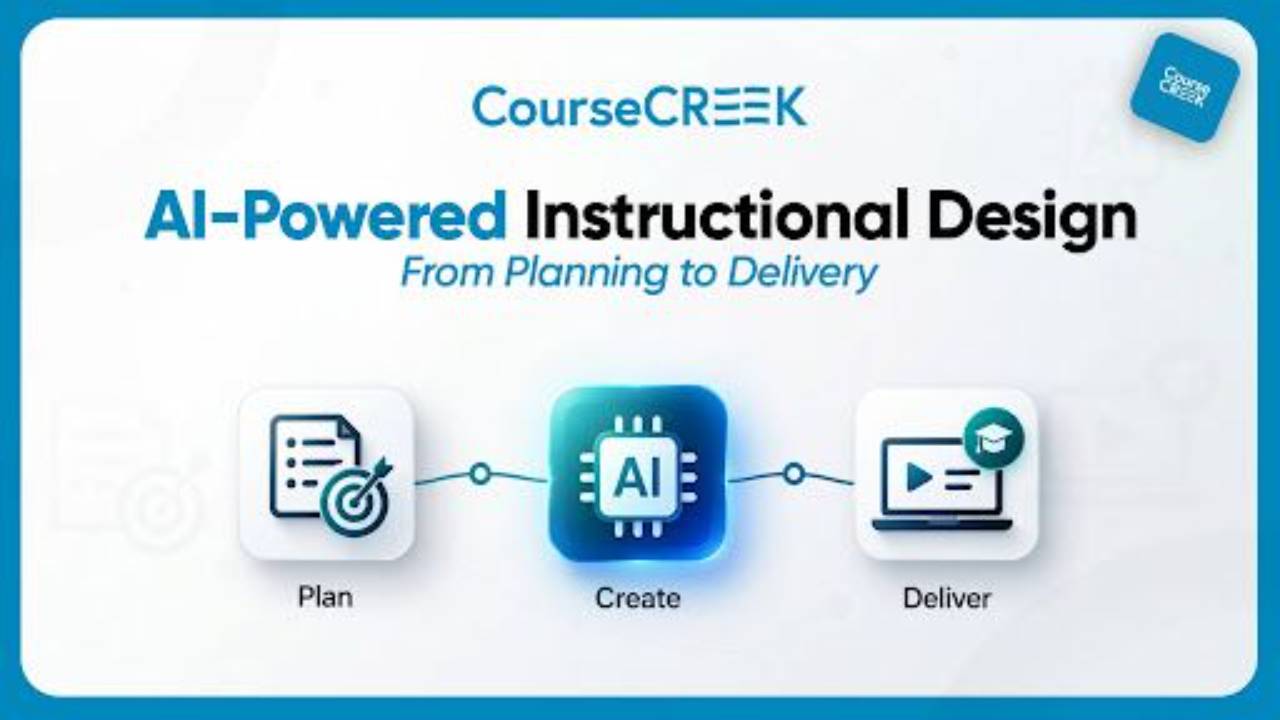
Artificial intelligence is changing the way online courses and training programs are planned, created, and delivered. A few years ago, building a professional learning program often required weeks or even months of research, writing, recording, editing, uploading, testing, and reviewing. Today, AI can help speed up many of these steps, making the development process more efficient and easier to scale.
However, effective instructional design is not simply about asking AI to create a course. The real value comes from combining artificial intelligence with a clear learning strategy, experienced instructional designers, the right technology, and a strong understanding of what learners actually need. When used properly, AI-powered instructional design can help businesses create better training, reduce development time, improve learner engagement, and make online learning easier to manage.
If your organization is planning a new training program, improving an existing course, or exploring how AI can support your learning strategy, you can book a strategy session with CourseCREEK to discuss the best approach for your goals.
|
TL;DR summary
|
What Is AI-Powered Instructional Design?
Instructional design is the process of planning and creating training or educational content in a way that makes it easier for people to understand, remember, and apply what they learn. AI-powered instructional design uses artificial intelligence to support that process by helping with research, course planning, content creation, assessment development, video production, translation, and learner support.
For example, AI can help organize large amounts of information, suggest course structures, generate first drafts, create quiz questions, produce voiceovers, translate content, summarize documents, and support more personalized learning experiences. These capabilities can save significant time, especially when organizations already have a large amount of existing content that needs to be turned into structured learning.
AI should not replace good instructional design. A strong learning program still requires clear objectives, accurate information, logical structure, useful examples, effective assessments, and a platform that makes the content easy to access. The best results come when AI supports experienced learning professionals rather than trying to replace them.
Start With the Learning Goal
One of the most common mistakes organizations make is starting with the technology instead of the learning objective. They begin by asking which AI tool, course builder, or Learning Management System they should use before clearly defining what they want learners to achieve.
The better starting point is to ask what the learner should know, understand, or be able to do after completing the training. For one organization, the goal may be to train new employees faster. For another, it may be to improve customer education, standardize procedures, deliver compliance training, or create a professional certification program.
Once the learning goal is clear, the right content, structure, technology, and delivery method can be selected around it. This prevents organizations from investing in tools that may not fit their actual needs.
If you are unsure how to turn your business knowledge into a structured learning program, CourseCREEK can help you identify the right direction during a strategy session.
Understand the People You Are Teaching
A successful learning program should be designed around the people who will use it. Training created for new employees will look very different from training designed for experienced professionals. A short customer education course may require a simple and practical structure, while a certification program may need detailed lessons, assessments, progress tracking, and formal completion requirements.
Understanding the learner helps determine the tone, level of detail, course length, delivery format, and type of activities that should be included. It also helps instructional designers decide which topics need more explanation and which topics can be covered more quickly.
AI can support this process by organizing learner information, summarizing research, and reviewing existing materials. However, human judgment is still important when deciding what learners actually need and how the content should be presented.
Turn Existing Knowledge Into a Structured Course
Many organizations already have the information they need to build a course. The challenge is that the content may be spread across PowerPoint presentations, PDFs, recorded webinars, videos, training manuals, internal documents, standard operating procedures, meeting recordings, and subject matter expert notes.
AI can help instructional designers review and organize this information more efficiently. It can identify repeated themes, summarize long documents, suggest lesson groupings, and help create an initial course structure. This can significantly reduce the amount of time required during the early stages of development.
Once the initial structure is created, an instructional designer can review it and determine what should be included, removed, simplified, expanded, or reorganized. This combination of AI and human expertise makes it easier to turn unstructured information into a learning experience that is clear and easy to follow.
Create a Learning Journey That Makes Sense
A good course should guide learners naturally from one topic to the next. They should understand where to begin, why each lesson matters, and how the information connects to the overall learning goal.
A well-designed learning journey usually starts with the foundational concepts before moving into practical examples, more advanced topics, and opportunities for learners to apply what they have learned. Depending on the project, this may include written lessons, videos, quizzes, assessments, case studies, exercises, downloadable resources, and interactive activities.
AI can help generate ideas for these elements, but the structure should still be guided by sound instructional design principles. The purpose is not to create as much content as possible. The purpose is to create the right content in the right order.
Use AI to Speed Up Course Development
Once the structure is approved, AI can make the course development process much faster. Instead of starting every lesson from a blank page, instructional designers can use AI to create initial drafts based on approved source material and learning objectives.
AI can assist with lesson content, video scripts, quiz questions, practical examples, summaries, case studies, knowledge checks, frequently asked questions, and supporting resources. This helps reduce production time and allows instructional designers to focus more on quality, clarity, and learner experience.
Human review remains essential. AI-generated content should always be checked for accuracy, tone, context, and relevance. The material should reflect the organization's own knowledge and should be suitable for the people who will actually use it.
Make Learning More Engaging
Online learning does not need to feel like reading a long document on a screen. Modern learning experiences can include video, animation, interactive presentations, simulations, quizzes, scenarios, AI avatars, voiceovers, and practical exercises.
AI has made many of these formats easier and more cost-effective to produce. Voice technology can help create professional narration, AI avatars can support certain types of training videos, and interactive simulations can allow learners to practice decisions in a safe environment before applying those skills in real situations.
Translation and AI voice tools can also make it easier to create learning programs for people in different countries or languages. However, these tools should always serve a clear learning purpose. Technology should improve the learner experience rather than distract from it.
Create More Personalized Learning Experiences
Traditional online courses often give every learner the same content, in the same order, regardless of their previous knowledge or performance. AI creates opportunities to make the learning experience more relevant to the individual.
For example, a learner who already understands a topic may be able to move ahead more quickly, while someone who is struggling may receive additional explanations or practice. A sales employee may use an AI-powered role-playing activity to practice conversations with customers, while a new employee may receive additional introductory training.
This type of personalization can make learning more efficient because people spend more time on the areas that matter most to them.
Choose the Right Learning Management System
Creating strong course content is only one part of the project. Organizations also need a platform where learners can access the training, track their progress, complete assessments, receive certificates, and interact with the learning experience.
This is where a Learning Management System, or LMS, becomes important. The right LMS can support automated enrollment, progress tracking, reporting, certificates, mobile learning, communication, user permissions, integrations, online payments, customer education, employee training, and multiple learning portals.
Choosing the wrong LMS can create unnecessary complications and additional costs later. The platform should be selected based on the organization's goals, number of learners, required features, reporting needs, integrations, and long-term plans.
CourseCREEK helps organizations select, implement, migrate, and manage learning platforms based on their specific requirements.
If you are comparing LMS platforms or planning a migration, you can discuss your requirements with the CourseCREEK team.
Use Automation to Improve the Learner Experience
A modern learning program should not require someone to manually manage every step of the learner journey. Automation can help streamline communication, enrollment, reminders, progress updates, certifications, and follow-up.
For example, a learner can automatically receive a welcome email after registering. If they stop partway through a course, a reminder can be sent. After completing an assessment, they can receive their certificate or be enrolled in the next course automatically.
These workflows can save learning teams a significant amount of administrative time. AI can also be used to provide faster learner support and automate repetitive processes, allowing the team to focus more on improving the training itself.
Measure What Happens After Launch
A course should not be considered successful simply because learners complete it. Organizations should also measure whether the training is producing the desired result.
For employee training, success may mean faster onboarding, fewer mistakes, better productivity, or improved job performance. For customer education, it may mean fewer support requests, stronger product adoption, or better retention. For education businesses, it may mean higher completion rates, increased course sales, improved learner satisfaction, or more repeat customers.
AI can help analyze learner activity and identify patterns that may not be obvious at first. It can help reveal where learners are struggling, where they stop progressing, or which areas of a course may need improvement.
This information allows organizations to improve the course over time instead of treating launch as the final step.
AI Should Support Instructional Designers, Not Replace Them
AI can save time, organize information, generate ideas, assist with writing, support video production, and help create assessments. What it cannot fully replace is the judgment required to understand a business, its learners, its goals, and the real-world context in which the training will be used.
Instructional designers bring the experience needed to decide what information matters, how a course should be structured, where learners may become confused, and how to connect the content to a measurable outcome.
AI makes the process more efficient. Instructional designers make sure the learning experience is useful, accurate, and meaningful.
How CourseCREEK Helps Businesses Build Better Learning Experiences
CourseCREEK helps organizations manage the complete eLearning journey from initial planning through development, technology setup, launch, and ongoing support. Instead of working with multiple disconnected vendors, businesses can work with one team that understands both the learning strategy and the technology required to deliver it.
CourseCREEK's services include learning strategy and consulting, instructional design, curriculum development, course creation, AI-powered content development, interactive learning, video production, AI role-playing simulations, multilingual course development, SCORM, xAPI and cmi5 development, LMS selection, LMS implementation, LMS migration, integrations, automation, ongoing LMS support, and digital marketing.
This approach is useful for organizations starting with only an idea, as well as businesses that already have training materials or an existing LMS and need help improving, migrating, or expanding their learning environment.
If you are planning a new training program, updating existing content, migrating to another LMS, or introducing AI into your learning strategy, CourseCREEK can help you identify the right next steps.
Book a strategy session with CourseCREEK.
From Course Idea to Complete Learning Experience
The biggest benefit of AI-powered instructional design is not simply that courses can be produced faster. The real benefit is that organizations can create better learning experiences more efficiently.
AI can support research, content production, multimedia creation, personalization, automation, and analysis. However, these elements still need to work together as part of a clear strategy.
A successful learning program combines strong instructional design, useful content, the right technology, thoughtful delivery, and ongoing improvement. When these elements are connected properly, businesses can create training that is easier to manage and more valuable for learners.
Is AI-Powered Instructional Design Right for Your Organization?
AI-powered instructional design can be valuable for organizations building a new online course, creating employee training, developing customer education, updating old training materials, migrating to a new LMS, building certification programs, creating multilingual training, or introducing more interactive learning experiences.
You do not need to know which AI tools or learning platforms to use before getting started. The first step is understanding your goals, your learners, and the type of experience you want to create.
From there, the right strategy, technology, and development process can be selected.
Talk with CourseCREEK about your learning goals and get a clearer direction for your project.
Frequently Asked Questions
What is AI-powered instructional design?
AI-powered instructional design is the use of artificial intelligence to support the planning, creation, delivery, and improvement of training or educational content. AI can assist with research, course planning, lesson development, assessments, video, translation, personalization, and automation.
Can AI create an entire online course?
AI can assist with many parts of course development, but human review is still important. An instructional designer should make sure the course is accurate, properly structured, easy to understand, and aligned with the organization's learning goals.
Can existing training materials be turned into an online course?
Yes. PowerPoint presentations, PDFs, manuals, recorded webinars, videos, internal documents, and other existing materials can often be reorganized and developed into a structured online learning program.
Can CourseCREEK help with LMS implementation?
Yes. CourseCREEK supports LMS selection, implementation, migration, integrations, course deployment, and ongoing LMS support.
Can CourseCREEK help create the course content?
Yes. CourseCREEK provides instructional design and eLearning development services, including curriculum planning, storyboarding, course development, interactive learning, video production, AI-powered content, assessments, multilingual development, and learning technology support.
How do we get started?
The first step is to discuss your learning goals, current content, technology, and challenges with the CourseCREEK team.
Build Your Learning Program With a Clear Strategy
AI is making online learning faster, more flexible, and easier to scale, but technology alone does not create a successful course. The strongest results come from combining the right learning strategy with professional instructional design, useful content, reliable technology, and thoughtful delivery.
Whether you are starting from scratch or improving an existing learning program, having a clear plan can save time, reduce unnecessary costs, and create a better experience for learners.
If you are ready to explore how AI, instructional design, LMS technology, automation, and eLearning development can work together for your organization, CourseCREEK can help.
10 Lessons About Course Creation, I Had to Learn the Hard Way.
Get the 10-day free email course sent straight to your inbox.
We will never sell your information.


